Free Isometric Sprites . Free isometric illustrations for designers, startups and companies. Images are exported at high resolution and low resolution. Isometric Game Sprite Pack Tower Defense Assets from mobilegamegraphics.com Download for high quality all tiles are free to use! Find & download free graphic resources for sprites. All from our global community of graphic designers.
Difference Between Isometric And Isotonic And Isokinetic
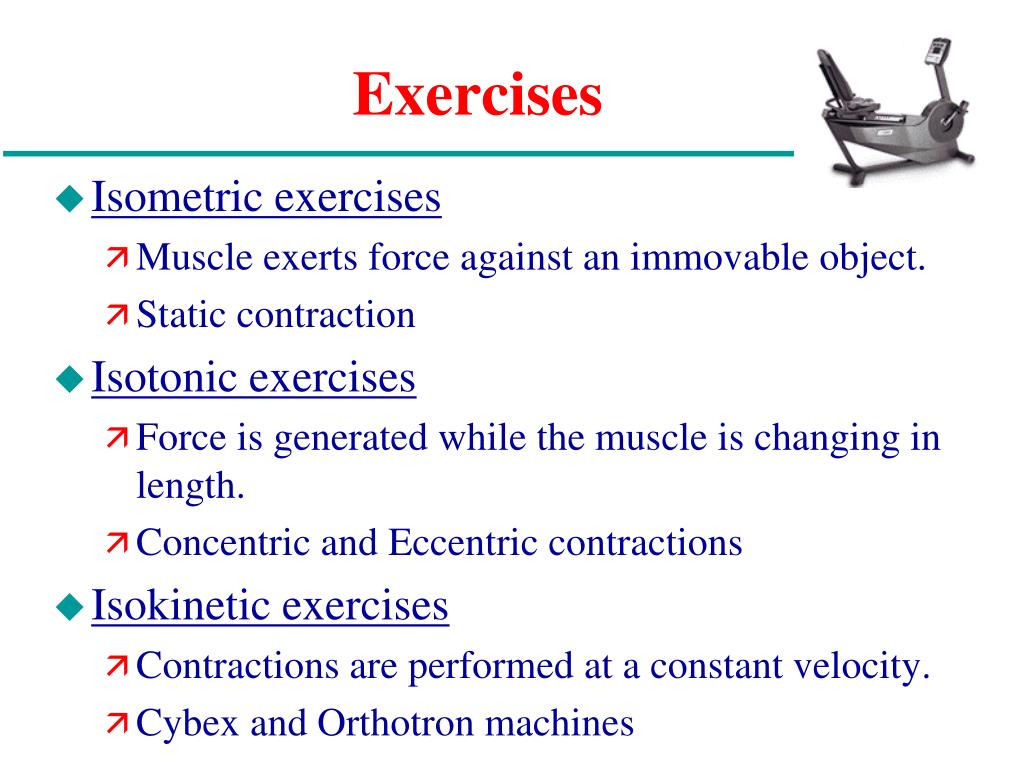
Difference Between Isometric And Isotonic And Isokinetic. There are four types of muscular contraction: This contrast to an isokinetic contraction in which the tension developed by the muscle as sit shortens at constant speed is maximal at all joint angles.
PPT Exercise Physiology and Fitness PowerPoint from www.slideserve.com
Isometric vs isotonic difference let’s try with a can of soda. Muscular strength is the force that a muscle or muscle group can exert against a resistance in one maximal effort. Eccentric exercises occur when the muscle is contracting but lengthening at the same time.
The Terms Isometric And Isotonic Refer To Different Types Of Muscle Contraction.
Most exercise involves isotonic muscle contractions, which cause shortening and lengthening with movement. Isotonic is usually used in cell biology. Isotonic, isometric, eccentric and isokinetic.
In An Isotonic Contraction, The Muscles Maintain The Same Tension As It Shortens While In An Isometric Contraction, The Muscle Remains The Same.
Another form of isotonic exercise is squats. These exercises require less time and equipment and can be carried out anywhere. Physical exercise involves muscle contraction.
Several Studies Have Been Developed To Determine Which Type Of Muscular Action (Isometric, Isotonic And Isokinetic) Elicits More Gains In Functional Strength And Muscle Mass.
Isotonic vs isokinetic leg extensions: (c) this involves movement but maintains a constant speed. Isokinetic (a) isometric exercise involves static muscle contraction against a stationary resistance.
Isotonic Exercise Is A Form Of Exercise That Puts A Constant Amount Or Tension On Your Muscles And Allows You To Move Your Joints Through A Full Range.
For example, archery, weight lifting, gymnastics are the examples of isometric movements. Examples include planks and wall squats. Tonic= tension), the tension (force of contraction) developed by the muscle remains almost constant while the muscle changes its length.
An Isometric Contraction Is One In Which Tension Is Developed But There Is No Change In The External Length Of The Muscle.
Muscle contractions are classified as either isotonic or isometric. People often use the terms isometric, isotonic, and isokinetic when talking about muscle rehabilitation. This contrast to an isokinetic contraction in which the tension developed by the muscle as sit shortens at constant speed is maximal at all joint angles.


Comments
Post a Comment